
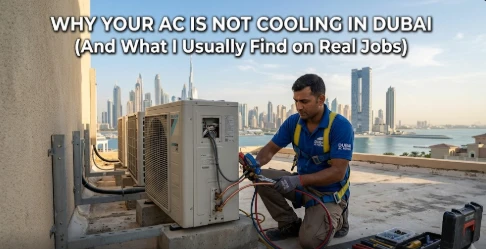
Almost every week, I get the same call: “AC is running, but no cooling.”
Most people think something major has failed. Some even assume the whole unit needs replacing. But after checking hundreds of AC units across Dubai homes, I can tell you this—most of the time, the problem is small and has been building up quietly for weeks.
The issue isn’t just the AC. It’s how the system is used, how often it’s maintained, and how Dubai’s environment slowly affects it.
Let me walk you through what actually happens on real service calls.
When I arrive at a job, I don’t start with gas or compressors. I go straight to the filter.
You’d be surprised how often it’s completely blocked with dust. Not just light dust—sometimes it’s thick enough to stop air from passing through properly.
In Dubai, this happens faster than people expect. Fine sand particles enter the system daily, especially in areas near open land or construction.
When airflow is blocked:
I’ve had customers ready to spend hundreds on repairs, and all it took was cleaning the filter.
A lot of people ask for gas refill immediately. It’s become the default assumption.
Here’s the reality: AC gas doesn’t just “finish” like fuel. If it’s low, there’s usually a leak.
I’ve seen situations where gas was refilled multiple times, but the cooling kept dropping again after a few weeks. Why? Because the actual leak was never fixed.
Some signs I look for:
If I suspect low refrigerant, I don’t just refill it. I check where it’s escaping from.
Skipping that step is like filling a leaking bucket.
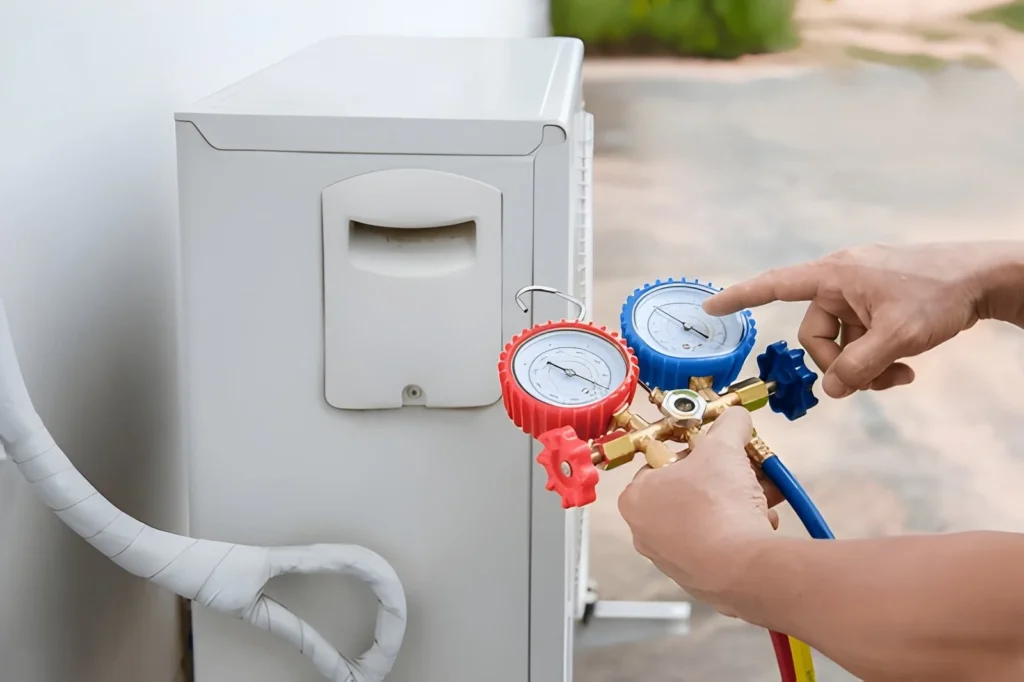
Most homeowners never look at the outdoor unit. It just sits there on the balcony or outside wall, collecting dust all year.
But this unit is doing heavy work—releasing heat from inside your room.
When it gets dirty:
I’ve opened outdoor units that were almost clogged with sand. Once cleaned, the cooling improved noticeably without touching anything else.
That’s why proper servicing always includes both indoor and outdoor units—not just a quick clean inside.
Sometimes the AC is working fine, but the room isn’t helping.
I’ve seen rooms where:
In these cases, even a good AC struggles to maintain temperature.
People lower the setting to 18°C thinking it will fix things. It doesn’t—it just keeps the compressor running non-stop.
A simple change like using thicker curtains or sealing gaps can make a noticeable difference.
This one usually comes from installation time.
If the AC is too small for the space, it will never cool properly no matter what you do. It will keep running, but the room temperature barely drops.
I’ve seen this a lot in larger living rooms where a smaller unit was installed just to save cost.
On the other side, oversized units cool quickly but switch off too soon, leaving the room feeling uncomfortable.
Proper sizing isn’t guesswork. It depends on:
Unfortunately, this step is often rushed.
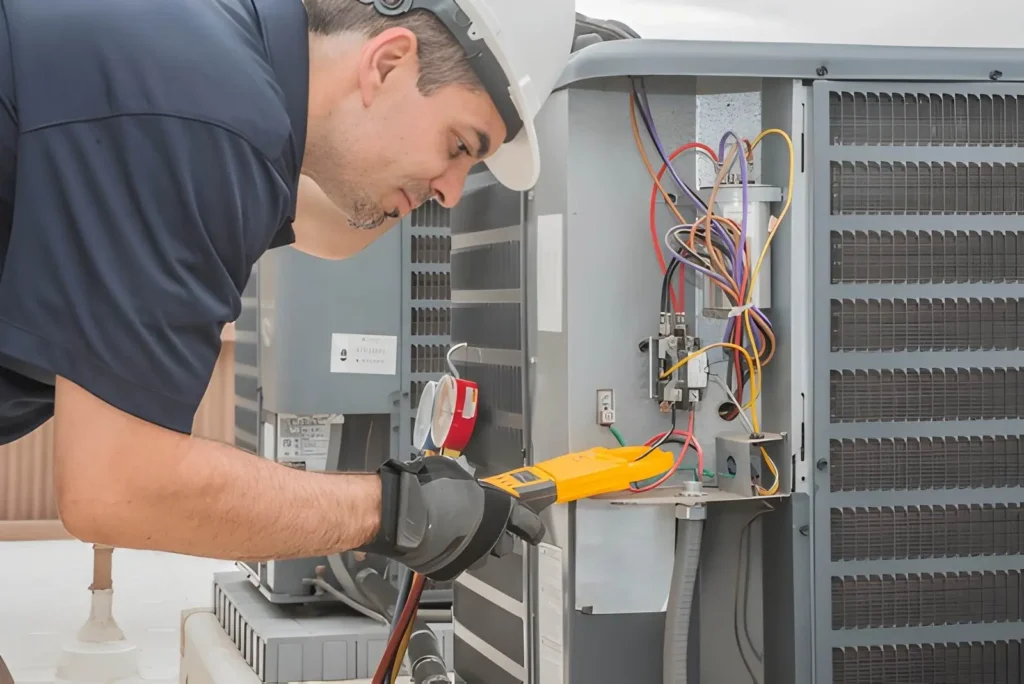
Not every issue is simple. Sometimes there’s a real fault inside the system.
A weak capacitor, for example, can stop the compressor from running at full power. The AC turns on, but cooling is poor.
Wiring issues can also affect performance without completely shutting the unit down.
These are the cases where proper diagnosis matters. Quick fixes won’t help—you need someone who actually checks the system, not just replaces parts randomly.
There are a few things you can check yourself before calling anyone:
If everything looks fine and cooling is still poor, then it’s worth getting it inspected.
I’ve noticed a clear pattern over time.
Customers who service their AC regularly rarely face sudden breakdowns. Their systems run smoother, cooling stays consistent, and electricity bills are more stable.
On the other hand, units that are ignored for long periods usually end up with:
Maintenance isn’t just cleaning—it’s checking the system before small issues grow.
In Dubai conditions, servicing every few months isn’t extra care—it’s necessary.
If your AC is in good condition, you shouldn’t need extremely low temperatures.
A properly working system can keep the room comfortable at around 24°C, even during peak summer.
If you feel the need to go much lower, it’s usually a sign that something isn’t right.
Lowering the temperature might feel like a quick fix, but it doesn’t solve the actual problem.
This part makes a bigger difference than people think.
A good technician will:
Be careful with services that immediately recommend gas refill or major repairs without proper checking.
I’ve seen many cases where customers paid for unnecessary work because the real issue wasn’t identified.
When an AC stops cooling in Dubai, it’s rarely a mystery. Most of the time, it’s something that has been slowly building up—dust, airflow issues, or a small fault that went unnoticed.
The key is not to panic or jump to conclusions.
Start with simple checks, understand how your system works, and don’t ignore early signs.
A little attention at the right time can save you from bigger problems later.